
When Hurricane Helene tore through western North Carolina in late September 2024, it knocked out roads, power, and cell service across a wide swath of Appalachia. FEMA and the National Guard eventually showed up — but for the first 48 to 72 hours, most people were completely on their own. What separated the neighborhoods that held together from the ones that fell apart wasn’t gear, but familiarity. Neighbors who already knew each other’s names, who already knew who had a chainsaw or a generator or a nurse in the house, organized quickly. Strangers didn’t.
That’s a pattern that shows up in disaster after disaster, including the 2021 Texas freeze, the Maui wildfires, the derecho that rolled across the Midwest in 2020. Individual preparedness matters, and I’m not here to argue otherwise. But it has hard limits. At some point — usually sooner than you’d expect — a crisis becomes too big for any single household to handle alone. The question is whether you’ve built any infrastructure around you when that moment arrives.
Most people haven’t. And to be honest, most preparedness content doesn’t push them to. It’s easier to sell a bug-out bag than to tell someone to go knock on their neighbor’s door. But the math is simple: a well-connected block of ten families has more food, more water, more tools, more medical knowledge, and more hands than any single prepper household, no matter how well stocked. You just have to build those connections before you need them.
Why Community Is the Most Overlooked Prep
In the hours right after a disaster, emergency services aren’t coming. Not because they don’t care, but because they’re overwhelmed. First responders triage by severity. Your flooded basement or downed tree or neighbor having a cardiac event might not be at the top of a very long list.
So who responds? The people nearby. Which means either you have relationships in place and you respond together, or you don’t and you each figure it out alone.
Individual preps solve the second scenario tolerably. But they don’t give you a mechanic when your generator dies. They don’t give you a nurse when someone’s wound won’t stop bleeding. They don’t give you a second set of hands to move a tree off your car. And they don’t give you anyone to take a shift watching the perimeter at 3am so you can sleep.
That’s what a network does. It multiplies your capacity without requiring anyone to become a full-time prepper. The retired electrician down the street doesn’t need to own a month of freeze-dried food … he just needs to know you, and you need to know him.
The Skills Audit — Mapping What Your Block Actually Has
Before you can build anything, you need to know what you’re working with. This doesn’t mean handing out questionnaires or calling a neighborhood meeting about doomsday scenarios. Rather, it means paying attention to the casual information people share all the time and filing it away.
Most of what you need to know comes out in ordinary conversation. “My son’s an EMT.” “I used to do HVAC before I retired.” “We just had a hand-pump well put in.” These are exactly the details that matter, and people volunteer them constantly; you just have to be listening.
Over a few months of casual interaction, you can build a fairly clear mental picture of who’s around you. What you’re looking for:
- Medical: Nurses, doctors, EMTs, paramedics, vets, anyone with serious first aid training. Even experienced caregivers who’ve managed a sick family member long-term.
- Trades: Electricians, plumbers, carpenters, mechanics, welders. The person who always seems to be fixing something in their driveway is worth knowing.
- Food & water: Gardeners with serious yields, hunters, fishermen, people with wells or high-capacity water storage.
- Tools & equipment: Generators, chainsaws, trucks with towing capacity, trailers, pumps. Hardware matters.
- Communications: Ham radio operators are gold. Even someone with a good supply of FRS/GMRS radios is valuable.
- Calm under pressure: Hard to quantify, easy to notice. Some people are steady when things go sideways. Others aren’t. You want to know which is which before you need to rely on someone.
Keep this in your head, not in a spreadsheet. The goal isn’t surveillance, but awareness. When your power goes out on day three and your chest freezer is at risk, you want to already know that Mike two houses over has a working generator and owes you a favor from when you helped him move last spring.
Building Trust Without Looking Like a Doomsday Guy
Nobody wants to be the neighbor who hands out copies of Patriots at the block party. The good news is that you don’t have to mention prepping at all to build the relationships that matter.
Trust is built through repeated low-stakes interactions. You wave when you see someone. You bring over extra zucchini from your garden. You help carry something heavy when you see someone struggling. You ask about the renovation project they’ve been working on for six months. None of this is strategic — it’s just being a decent neighbor — but the cumulative effect is that when a real crisis hits, you’re not a stranger. You’re someone they trust enough to open the door for at 2am.
A few things that actually work:
- Show up to whatever already exists. Block parties, school events, neighborhood watch meetings, even if they’re not your thing, because visibility matters.
- Organize something small and low-pressure. A fire pit night for the four nearest houses. A summer potluck. A tool-share arrangement (“I’ve got a ladder if you ever need it”). Small gatherings build familiarity faster than large events.
- Offer help before you need it. The neighbor who showed up unsolicited when your pipe burst last winter will get a much warmer response than the one who only knocks when they need something.
- Fix things in your own yard. People who visibly maintain their property signal competence and shapes how neighbors perceive you.
Remember, you’re building social capital, not a coalition. Coalitions form around shared ideology whereas social capital forms around shared experience. You want the latter, because it survives disagreements about politics, prepping philosophy, and everything else.
Setting Up a Communication Tree That Works Without Phones
Cell towers failed across western NC for days after Helene. The same thing happened in parts of Texas during the 2021 freeze. In a serious regional disaster, assuming you’ll be able to text or call your neighbors is a bad assumption.
A communication tree is simple: instead of one person trying to reach everyone, each person is responsible for reaching two or three others. Information flows through the network without requiring a central hub that might be unreachable.
Setting one up takes maybe one conversation per neighbor. What you need to exchange:
- Home address and full name (so you can send someone else to check on them)
- An out-of-area emergency contact — often easier to reach in a regional disaster than local contacts
- Any critical vulnerabilities: someone on oxygen, someone diabetic, someone who can’t walk well. This is sensitive and requires real trust — share it only with people you’d actually call in an emergency.
- A rally point: somewhere everyone knows to go if communication fails. The corner park, a specific house on high ground, whatever makes sense for your geography.
- A simple signal system: a red cloth in the window means “I need help.” Three knocks means “checking on you, I’m okay.”
If some neighbors have GMRS radios, you have a neighborhood channel. If anyone’s a ham operator, build your tree around them. But don’t let the absence of radio equipment become a reason not to build the tree. Paper, knocks, and runners work fine.
Resource Sharing — What to Formalize, What to Leave Loose
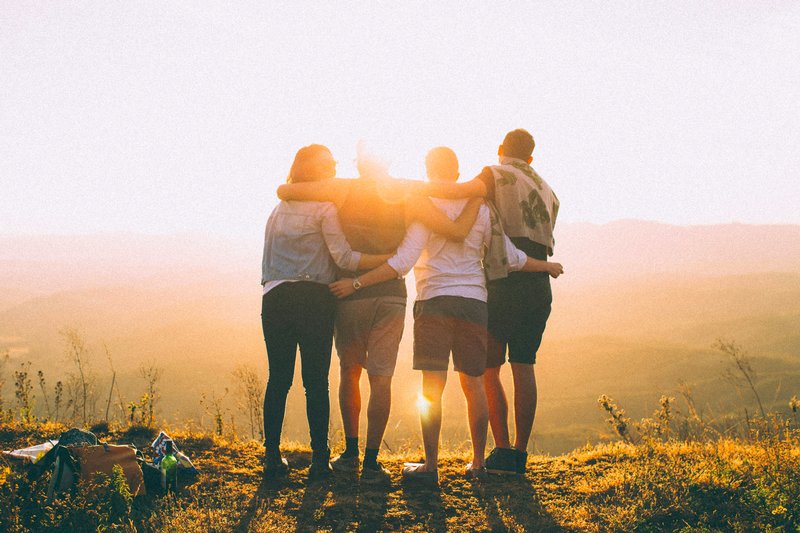
Most resource sharing in a real crisis happens informally and fast. You don’t need agreements in place for someone to hand you a bottle of water when you’re standing in their driveway with a flooded basement. What you need is the relationship that makes that offer feel natural to both parties. That said, some things benefit from a conversation ahead of time.
Generator use is the obvious one. If you and a neighbor both have generators, it’s worth knowing how much fuel each of you has stored, who gets priority for what (medical equipment first, then refrigeration, then everything else), and whether you’d consider a rotation to stretch fuel further. That conversation is awkward to have in the first 12 hours of a blackout, but it’s far less awkward over a beer on a normal evening.
Water access is similar. If someone on your block has a well, it’s worth knowing — casually, not contractually — whether they’d share if municipal water went out. Most people say yes. But you want to know that before you’re knocking on their door, desperate and thirsty.
The general principle: be generous first and consistently. Lend tools without being asked for them back. Share garden excess. Help when you see a need. That pattern of generosity builds the implicit understanding that it flows both ways — without anyone ever having to say so explicitly.
Assigning Roles Based on What People Already Know
In a real emergency, people perform best when they’re doing something they already know how to do. A retired nurse doesn’t need to be taught triage, she just needs to know that’s where she’s most needed. A mechanic doesn’t need a manual to keep a generator running.
The mistake most people make when imagining community disaster response is picturing something formal and military, such as structured roles, rehearsed procedures, chain of command. That’s not what actually happens and not what you’re building. What you’re building is more like a loose division of labor that emerges naturally from who’s there and what they can do.
Which means the groundwork you’re actually laying is knowing, before the crisis, who’s likely to end up doing what. Who in your network would naturally handle medical? Who’d handle security and perimeter? Who’s the person that stays calm and coordinates when everyone else is stressed? Who’s got the mechanical knowledge to keep equipment running?
Again, you don’t need to formally assign these roles because that conversation would be bizarre out of context. But knowing the answers in your own head means that when the moment comes, you can point in the right direction fast instead of wasting critical time figuring out who should be doing what.
One practical note: don’t ask people to do things that require skills they don’t have, even if they’re willing. The accountant offering to help is invaluable for tracking resources and organizing distribution. Put him there. Don’t put him on wound care simply because you need bodies as misallocating people costs time and trust.
How Mutual Aid Fits With Your Individual Preps
A network doesn’t replace individual preparedness, it amplifies your preparedness. Because the stronger your household preps, the more you can contribute to a shared response instead of drawing from it.
Your personal stores are yours. What a network gives you is access to capabilities your household doesn’t have — the nurse, the mechanic, the generator — without requiring you to personally acquire all of them. It also gives you redundancy. If your water filter breaks, maybe someone nearby has a spare. If your generator fails, there might be another running on the block.
Think of it as complementary layers. Your individual preps handle the first 24 to 72 hours, the immediate self-reliance phase when there’s no time to coordinate. The network activates beyond that, when sustained survival requires more than one household can provide. Building solid urban survival fundamentals on the individual side is still the foundation; the network is what you build on top of it.
The psychological dimension matters too. Isolation in a crisis is its own threat because it amplifies fear, degrades decision-making, and wears people down fast. Knowing you have people around you who are on your side changes that equation significantly.
Getting Started This Week
None of this requires a big launch. The whole point is that it builds gradually through ordinary behavior.
- Pick one or two neighbors you already have some rapport with. Not strangers, but people you’ve exchanged at least a few words with. These are your starting points.
- Have one real conversation with at least one of them. Not about prepping. About anything. Ask how they’ve been. Ask about the project in their yard. Listen more than you talk.
- Do one unsolicited useful thing. Bring in their trash cans. Hand over extra produce. Offer to help with whatever you notice they’re working on. Small gestures compound over time.
- Start a mental notes list. What do you already know about the people on your block? Skills, resources, vulnerabilities? Write it down privately.
- Do a quick audit of your own household. What do you bring to a network? What are your gaps?
That’s it for week one. You’re not organizing a preparedness coalition; Instead, you’re being a good neighbor with some intentionality behind it. Repeat that over months, and you’ll have built something real without anyone ever needing to have an uncomfortable conversation about the end of the world.
The next disaster isn’t going to wait until you’re ready. But it will respect the relationships you already have in place.
This post was contributed by the team at SurvivalLab (survivallab.co), a preparedness resource focused on practical emergency readiness for urban and suburban households.
